
When hair starts shedding or thinning, most people blame their shampoo. Often the real cause is closer to home: a rough few months at work, skipped meals, bad sleep, a hormone shift. Any of these can knock your hair out of its normal growth cycle.
Hair grows from follicles, and follicles need a steady supply of nutrients to do the job. Put your body under strain and more hairs than usual stop growing and move into the resting phase. A few months later you notice the brush filling up and your ponytail feeling thinner.
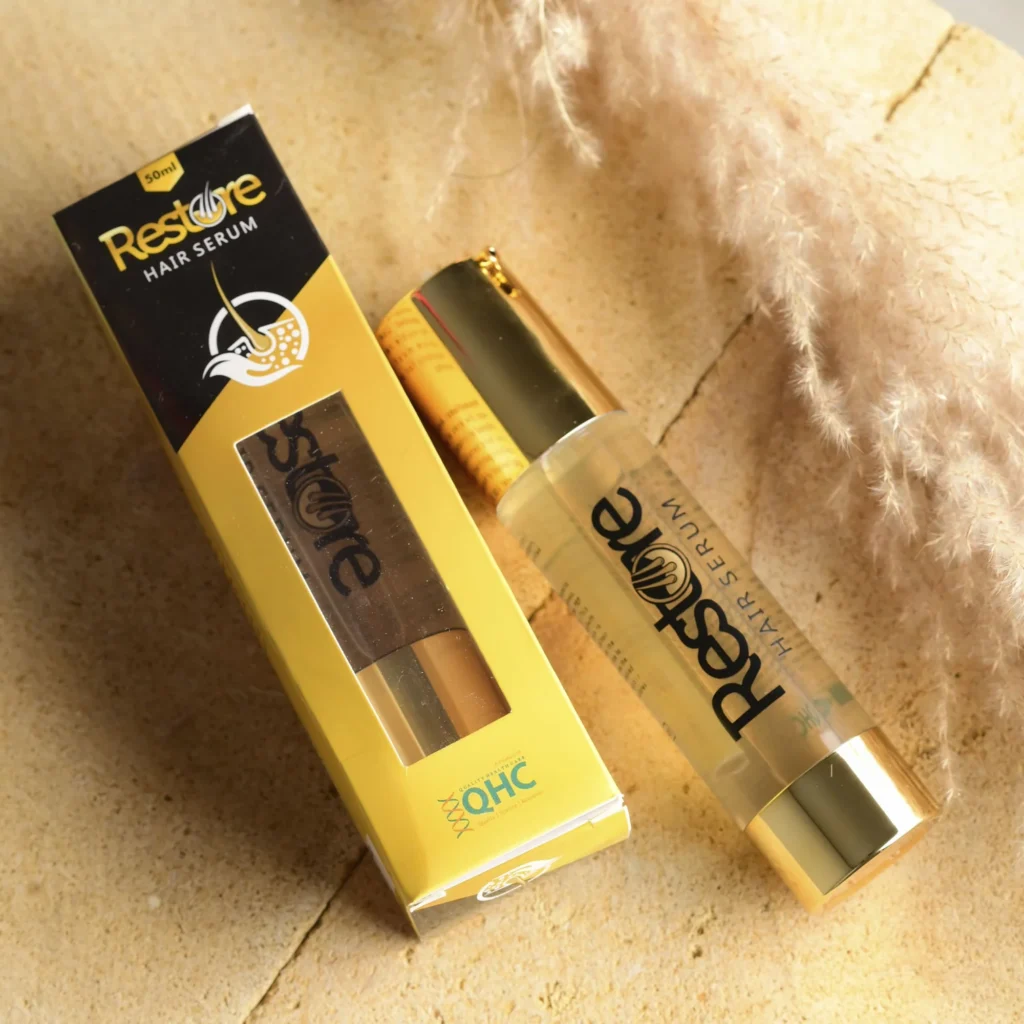
Fix the habits first. A scalp product like QHC Restore Hair Growth Serum is something you can add alongside that.
How Does Stress Affect Hair Growth?
Stress that goes on for weeks, whether it’s physical or emotional, changes how your body handles hormones and inflammation. Your follicles react to it.
The condition most linked to stress is Telogen Effluvium. A large number of follicles shift into the resting phase at once. The timing is what confuses people. The shedding usually starts a few weeks or even months after whatever caused it, so by the time you notice, the trigger feels like old news.
Things that commonly set it off:
- Anxiety or constant emotional pressure
- A major life change
- Illness or a high fever
- Surgery and a long recovery
- Losing weight quickly
- Poor sleep and exhaustion
Extra hair on your pillow, in the shower drain, or on your brush is the usual sign. It normally settles down, but try to work out what caused it.
1. Poor Nutrition Can Weaken Hair
Hair is mostly keratin, which is a protein. If you aren’t eating enough protein, your hair tends to show it early. Running low on certain vitamins and minerals does the same. Strands get weaker and come out more easily.
The ones that matter most:
- Protein: gives your body the amino acids it needs to build keratin.
- Iron: helps carry oxygen around the body. Low iron is linked to some kinds of hair loss.
- Zinc: helps with cell function, tissue repair, and healthy follicles.
- Vitamin D: plays a role in the follicle cycle, and low levels turn up in some hair-loss conditions.
- Biotin: helps the body process nutrients and make keratin. A real deficiency can cause thinning, but most people already get enough and don’t need a supplement.
- Healthy fats: supply the fatty acids your skin and scalp need.
Eggs, fish, chicken, beans, nuts, and leafy greens cover most of that. Supplements are different. If you haven’t confirmed you’re deficient in something, taking more of it usually won’t change much.
2. Lack of Sleep Can Affect Hair Health
Your body does a lot of its repair work while you sleep. Stay up late most nights, wake up repeatedly, or never get enough hours, and your health slips across the board.
Poor sleep also makes stress harder to cope with, and that stress can end up in your hair.
Some things that help:
- Go to bed at roughly the same time every night.
- Put your phone down before bed.
- Don’t have caffeine late in the day.
- Keep your room cool, dark, and comfortable.
- Do something calming for a few minutes before sleeping.
3. Hormonal Changes Can Influence Hair Growth
Hormones regulate plenty of things, hair growth included. When they shift, follicles behave differently, and that can mean more shedding or less density.
A few common causes:
- Thyroid problems: both an underactive and an overactive thyroid can cause thinning.
- Androgen sensitivity: in people who are genetically prone to it, dihydrotestosterone (DHT) gradually shrinks certain follicles. This is androgenetic alopecia, better known as pattern hair loss.
- Pregnancy and postpartum: hormone changes after childbirth can cause heavy shedding for a while, which usually settles on its own.
- PCOS: polycystic ovary syndrome can lead to scalp hair thinning in some women.
If thinning keeps going or becomes obvious, find out what’s behind it. A cosmetic product won’t fix a hormonal problem.
4. Smoking and Unhealthy Lifestyle Habits
What you do day after day shows up in your hair and scalp. Smoking exposes your body to chemicals and oxidative stress, which can affect your tissues generally. Crash diets, heavy drinking, and long stretches without moving can also throw off your health and nutrition.
Habits worth building:
- Eat balanced meals.
- Stay active.
- Drink enough water.
- Quit smoking.
- Find a way to deal with stress that works for you.
- Keep your sleep regular.
5. Excessive Heat Styling and Harsh Hair Treatments
Sometimes the roots are fine and the problem is further down. Hair can look thin simply because the strands are weak and snapping off.
Straightening every day, blow-drying on high heat, bleaching, and chemical treatments all damage the hair shaft. Tight ponytails and styles that pull on the roots can lead to traction hair loss.
To cut down on damage:
- Use heat tools less often.
- Put a heat protectant on before you do.
- Don’t tug or rub wet hair.
- Pick gentle hair products.
- Avoid very tight styles.
- Leave more time between chemical treatments.
Breakage and shedding are two different problems. With breakage, the hair snaps somewhere along its length. With shedding, the whole hair falls out from the scalp.
Where Does QHC Restore Hair Growth Serum Fit In?
Habits come first, but your scalp deserves some care too. A product with the right ingredients can help your hair look stronger and healthier.
QHC Restore Hair Growth Serum contains Procapil, Baicapil, AnaGain, Biotin, Saw Palmetto, and Xylishine. All of these are common in products made for the scalp and hair fibre. Here’s a quick look at each.
Procapil
A cosmetic complex often used in products for thin, weak-looking hair. It combines plant-based ingredients with biotinoyl tripeptide-1 and is meant to support follicle care.
Baicapil
A plant-based complex used in products that go after hair density and the look of thinning. It’s meant to help hair look healthier.
AnaGain
An ingredient taken from pea sprouts. Cosmetic hair products use it to help hair look fuller and to look after the scalp.
Biotin
Also known as vitamin B7. It’s involved in the metabolic processes that keep hair healthy, and it matters most when your body is actually low on it.
Saw Palmetto
A plant extract found in lots of products for thinning hair, mostly to improve the look of density. The evidence for topical cosmetic benefits is still developing.
Xylishine
A cosmetic hair complex that changes how hair looks and feels. You get smoother, shinier hair that’s easier to manage.
The serum is a scalp product, nothing more. It won’t correct a nutritional deficiency, treat a medical condition, or replace a proper check-up if you have a diagnosed hair-loss disorder.
Simple Daily Habits for Healthier Hair
You don’t need a complicated routine. A few basics go a long way.
- Eat balanced meals: get enough protein, iron-rich foods, vegetables, and healthy fats.
- Manage stress: walk, meditate, try breathing exercises, or do whatever helps you unwind.
- Keep a sleep schedule: give your body enough time to rest.
- Look after your scalp: wash regularly for your scalp type and don’t let product build up.
- Go easy on your hair: limit heat styling and harsh chemical treatments.
- Give products time: pick something suitable and use it long enough to judge it fairly.
Build Healthier Hair Habits with QHC
Good hair takes more than a decent shampoo. What you eat, how stressed you are, how well you sleep, your hormones, and how you treat your hair every day all play a part in how it looks.
Sort out the habits that are hurting your hair and give your body what it needs, and normal growth gets a better chance. If you want extra scalp care, QHC Restore Hair Growth Serum brings Procapil, Baicapil, AnaGain, Biotin, Saw Palmetto, and Xylishine together in one formula.
Healthy habits plus the right products can help you work toward stronger, fuller-looking, easier-to-manage hair.
If you notice sudden, patchy, or lasting hair loss, see a dermatologist to find the cause and talk through treatment.
Frequently Asked Questions
1. Can stress cause hair thinning?
Yes. Long-term physical or emotional stress can trigger Telogen Effluvium, where more follicles than usual enter the resting phase. You end up with more shedding and temporary thinning.
2. Which lifestyle habits are bad for hair health?
Poor nutrition, too little sleep, smoking, crash dieting, unmanaged stress, and heavy heat styling can all hurt your hair. Improving them helps it look stronger.
3. Can poor nutrition cause excessive hair shedding?
Yes. Too little protein, iron, zinc, or certain vitamins can lead to shedding and thinning. A balanced diet gives your hair what it needs to grow normally.
4. Does lack of sleep affect hair growth?
Poor sleep hurts your general health and makes stress harder to handle. Researchers are still studying whether sleep loss directly causes hair loss, but a regular sleep routine is worth keeping either way.
5. How does QHC Restore Hair Growth Serum support hair health?
It contains Procapil, Baicapil, AnaGain, Biotin, Saw Palmetto, and Xylishine. These ingredients are used in hair-care products made to support scalp care, density, strength, shine, and manageability.
6. Can a hair growth serum replace a healthy diet?
No. A serum can’t give your body what food does. Eating well, sleeping enough, managing stress, and caring for your scalp all work together.
7. How can I keep my hair stronger and healthier naturally?
Eat balanced meals, manage stress, get enough sleep, limit heat styling, and keep up a scalp-care routine that suits you. Stick with it for a few months before judging the results.