
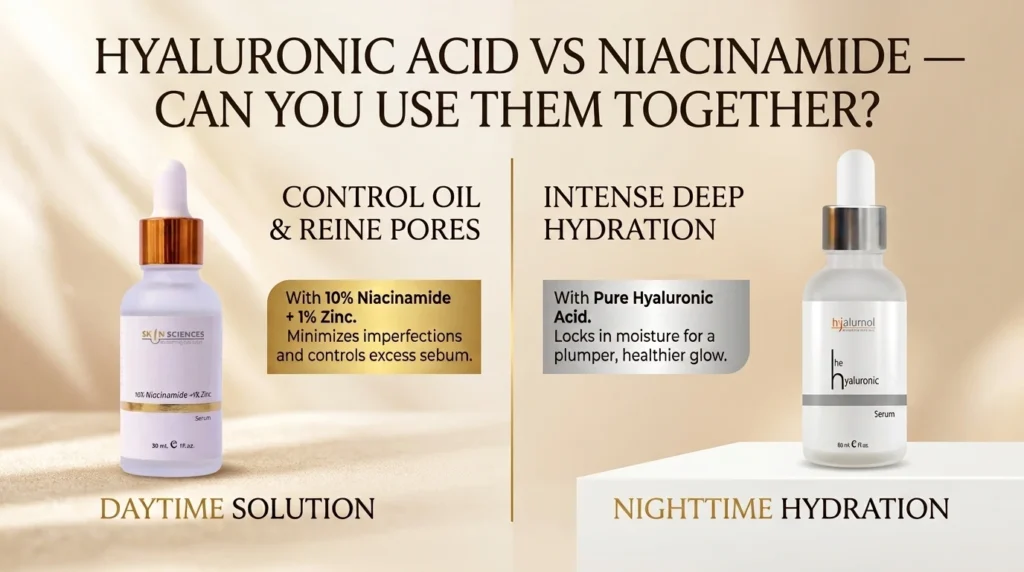
Yes. You can use hyaluronic acid and niacinamide together and this pairing is one of the safest combinations in skincare. Hyaluronic acid draws moisture into the skin while niacinamide supports the skin barrier and helps balance oil production. They work in different ways so instead of competing they end up supporting each other. Skin Sciences Hyaluronic Serum is often paired with niacinamide based products for this exact reason since hydration and barrier support tend to work best side by side. Understanding what each ingredient actually does makes it much easier to see why combining them causes no conflict at all.
What Hyaluronic Acid Actually Does
Hyaluronic acid is a moisture binding ingredient. It pulls water into the outer layer of skin and holds onto it which gives skin a plumper smoother look. It does not exfoliate. It does not treat acne or pigmentation either. Its entire job is hydration and that focus is exactly why it suits almost every skin type including oily and acne prone skin since it adds moisture without adding oil.
What Niacinamide Actually Does
Niacinamide works differently. It is a form of vitamin B3 that helps calm redness supports the skin barrier and can help control excess oil over time. With regular use it is also known to help fade the look of dark spots and improve overall skin texture. Where hyaluronic acid focuses purely on hydration niacinamide focuses more on skin function and tone.
Quick Comparison
| Feature | Hyaluronic Acid | Niacinamide |
| Main Job | Pulls moisture into skin | Strengthens barrier and controls oil |
| Best For | Dryness dullness and fine lines | Uneven tone redness and enlarged pores |
| Texture | Lightweight and gel like | Watery and fast absorbing |
| Skin Feel After Use | Plump and hydrated | Calm and balanced |
| Time to See Results | Immediate hydration boost | Two to four weeks with regular use |
| Sun Sensitivity | None | None |
| Pairs Well With | Niacinamide vitamin C and moisturizer | Hyaluronic acid vitamin C and sunscreen |
Why This Combination Works So Well
These two ingredients target different concerns so they never compete for absorption. Niacinamide strengthens the skin barrier which helps hyaluronic acid hold onto moisture even better. Together skin ends up feeling hydrated calm and balanced instead of oily or tight. Think of it as teamwork. One brings the water in while the other keeps it locked in place.
How to Layer Them the Right Way
Order matters more than people expect. Applying products in the wrong sequence can reduce how well either ingredient performs even if the products themselves are high quality.
- Cleanse your face and pat it slightly damp
- Apply hyaluronic acid serum first since it works best on damp skin
- Wait a minute for it to settle
- Follow with your niacinamide serum
- Finish with a moisturizer to lock everything in
This order lets hyaluronic acid pull in moisture right away and gives niacinamide a proper chance to absorb afterward. If you apply niacinamide first you risk creating a light barrier that makes it harder for hyaluronic acid to reach the skin the way it needs to.
Can This Combination Cause Irritation
For most skin types no. Both ingredients are gentle and usually well tolerated even by sensitive skin. If you are trying niacinamide for the first time it is smart to patch test since new activities can cause mild tingling for some people. Irritation is far more likely to come from a high percentage of niacinamide or from pairing it with stronger actives like retinol rather than from hyaluronic acid itself.
Who Should Be Careful
- Very reactive or compromised skin may need to introduce one ingredient at a time
- First time niacinamide users should ease in slowly starting a few times a week
- Avoid adding too many new actives at once so you can tell what is actually causing a reaction if one happens
Do Your Skin Concerns Need One or Both
Not everyone needs both at once. Dryness and dullness respond well to hyaluronic acid alone. Oil control uneven tone or a weak barrier makes niacinamide more useful. For full hydration and balance together the two work better than either one alone. Oily skin can lean more on niacinamide with a light hyaluronic acid layer underneath. Dry sensitive skin can prioritize hyaluronic acid first and bring in niacinamide gradually.
Morning or Night
Both ingredients work at any time of day which makes this pairing flexible.
| Time | Hyaluronic Acid | Niacinamide |
| Morning | Keeps skin plump under sunscreen | Helps control oil through the day |
| Night | Supports repair while sleeping | Helps calm and even out skin overnight |
| Sun Sensitivity | None | None |
Choosing the Right Products for This Combo
Not every serum layers well. Some feel heavy and leave a film behind that blocks whatever you apply next. A good hyaluronic acid serum does the opposite and sinks in fast without any greasy residue. Skin Sciences Hyaluronic Serum is made with this in mind. Its lightweight texture absorbs quickly and makes room for niacinamide to work right after it. Picking serums built for layering can be the difference between a routine that works and one that just sits on the surface.
Last Words
Hyaluronic acid and niacinamide can absolutely be used together. This pairing is one of the gentlest and most effective combinations available. Hydration from hyaluronic acid combined with the barrier support and tone balancing effects of niacinamide gives skin a more complete kind of care than either ingredient can offer on its own. Applied in the right order and given a little consistency this simple two step routine can make a real difference in how skin looks and feels over time.